In NSW, most light vehicles more than five years old, counted from the compliance plate date, need a safety inspection report (pink slip) before each yearly rego renewal. That includes utes, vans and trailers up to 4.5 tonnes ATM. The report is valid for six months and costs up to $52 for a car from 1 July 2026.
Key takeaways
- NSW light vehicles more than five years old, counted from the compliance plate, need a yearly pink slip before rego renewal.
- Trailers up to 4.5 tonnes ATM count as light vehicles, but unbraked trailers under 251 kg tare are exempt.
- From 1 July 2026 the maximum fee is $52 for a light vehicle, $41 for a trailer with brakes and $27 for one without.
- A NSW pink slip is valid for six months, and repairs made within 14 days can be rechecked at the same station for no extra inspection fee.
- The Common Expiry Date scheme that aligns rego dates is only open to fleets of 10 or more light vehicles.
Most pink slip guides are written for one private car. The rules read differently when you run four utes of different ages and a tradie trailer, all with their own renewal dates. The rule itself is the easy part. The hard part is that each vehicle crosses the five-year line on its own schedule, and the trailer is easy to forget.
Which of your vehicles actually need a pink slip?
Transport for NSW says most light vehicles more than 5 years old need a yearly safety inspection report before rego can be renewed. The five years run from the month and year on the vehicle’s compliance plate, not the date you bought it. For an imported vehicle, they run from the month and year of manufacture.
“Light vehicle” is wider than most people assume. In NSW it includes:
- passenger cars and motorcycles
- goods-carrying vehicles with a GVM of 4.5 tonnes or less and no power-operated brakes, which covers the typical work ute and van
- trailers and caravans with an aggregate trailer mass (ATM) of 4.5 tonnes or less
That last line is the one fleets miss. The box trailer or tandem trailer behind your ute is registered separately and has its own renewal. Once it is old enough, it needs its own inspection too.
There are exemptions. The most relevant one for a trade business: trailers with a tare under 251 kg and no brakes do not need a safety check to renew. Caravans under 411 kg tare, certain plant trailers up to 4.5 tonnes GTM and some conditionally registered vehicles are also exempt.
Your registration renewal notice tells you whether an inspection is required. When in doubt, the notice is the final word, not your own reading of the compliance plate.
What does a pink slip cost in 2026–27?
Transport for NSW sets maximum fees for safety checks. The current figures took effect on 1 July 2026, so any page still quoting $51 for a car is a year out of date.
| Inspection type | Maximum fee (inc. GST), from 1 July 2026 |
|---|---|
| Light vehicle (car, ute, van) | $52 |
| Motorcycle | $29 |
| Trailer without brakes | $27 |
| Trailer with brakes | $41 |
These are maximums, so an inspection station can charge less but not more. A mobile examiner charges the same inspection fee but may add a call-out or travel fee. They have to charge that separately and tell you what it is before you book.

What does it cost a small fleet in a year?
Take a typical small business with four utes and one braked trailer. What matters is the date on each compliance plate, not how long you have owned the vehicle.
| Vehicle | Compliance plate | More than 5 years old in 2026? | Pink slip fee |
|---|---|---|---|
| Ute 1 | 2018 | Yes | $52 |
| Ute 2 | 2020 | Yes | $52 |
| Ute 3 | 2023 | No | $0 |
| Ute 4 | 2025 | No | $0 |
| Tandem trailer, with brakes | 2017 | Yes | $41 |
| Total | $145 |
The cost is small. What makes it annoying is timing: those three inspections fall on three different renewal dates, in three different months. And around 2028, Ute 3 quietly joins the list. Nothing tells you it has changed category except the renewal notice.
For owner-operators, that is the real job. The fee is not the problem. You need to know which vehicle needs what, and when.
How far ahead can you get the inspection done?
A NSW safety inspection report is valid for 6 months. You have to use it to renew the registration within that window, or it lapses and you pay for another one.
Rego itself can be renewed online up to 3 months before it expires, once you have a renewal notice. So there is a comfortable window. Get the inspection done any time in the three months before expiry, then renew the same week.

One detail catches people out. Some guides say a pink slip lasts 42 days. That figure is for other inspections: interstate inspection reports are valid for 42 days or less, and so are AUVIS (blue slip) inspections for unregistered vehicles. A standard NSW pink slip for a light vehicle lasts 6 months.
You also need CTP cover (the green slip) in place before you can renew. That is two things to line up per vehicle, not one. Our guide to catching an expired rego before someone drives the ute covers why that double lead time is where most lapses start.
What happens if a ute fails?
If a vehicle fails, it has to be repaired before the rego can be renewed. NSW gives you a practical out:
- Complete the repairs within 14 days and take the vehicle back to the same inspection station, and no extra inspection fee applies.
- Repair it after the 14 days and you pay another inspection fee.
- If a mobile examiner found the defect, you do not have to use them for the repairs. Any suitably qualified mechanic can do the work.
For a fleet, this is the argument for inspecting early. A failure two days before expiry leaves no room for parts to arrive. A failure six weeks out does.
What does the examiner actually check?
The inspection follows the Light Vehicle Safety Check Standards issued by Transport for NSW. For a light vehicle, the rules are grouped under these headings:
| Area | What that covers, in short |
|---|---|
| Brakes | Pedal, park brake, warning lights, visible leaks, a braking performance test |
| Towing attachment | Towbar and tow ball mounted securely, not cracked or loose |
| Steering and suspension | Steering components and suspension, checked from underneath |
| Wheels and tyres | Condition and tread depth, which must be at least 1.5 mm |
| Body condition | Doors and latches, windscreen, airbags |
| Lighting | Headlights, brake lights, indicators |
| Engine, driveline and fuel system | Oil leaks, mountings, exhaust, fuel leaks |
The towing attachment line matters for trade utes. The towbar gets looked at as part of the ute’s own inspection, even if the trailer is registered separately. If the towbar is loose or cracked, the ute fails.
The NSW roadworthiness guidance also points out that tyres include the spare, and must not be smooth, cracked, bulging or unevenly worn. Checking the spare before the inspection costs nothing.
Can the inspection come to your depot?
Yes. Mobile safety check examiners are authorised the same way as inspection stations and lodge the result electronically with Transport for NSW. They can inspect cars, motorcycles and trailers at your workplace, as long as the site suits:
- a hard, level surface, clear of obstructions
- room to fully open the boot, bonnet and doors
- not near a school zone or in a high-traffic or pedestrian area
You do not need to be there during the inspection. Agree payment, access to the vehicle and how you will receive the report when you book.
For a small fleet, the main benefit is that nobody loses half a day at a workshop. If two vehicles and a trailer fall due within the same few months, the 6-month validity lets you book one visit for all three. Each inspection then just has to be used before its report expires.

Can you line all your rego dates up?
NSW has a Common Expiry Date (CED) scheme that puts a fleet’s registrations on one renewal date. It is only open to fleets with 10 or more light vehicles, or 2 or more heavy vehicles, and conditional or seasonal registrations cannot be included. Vehicles on the scheme also cannot be renewed through the standard online renewal.
So a business with four utes cannot use it. Your renewals stay staggered, which is exactly why the pink slips end up spread across the year.
Changing the rego term does not make inspections go away either. If you move a vehicle from 6-month to 12-month registration, Service NSW may require a fresh inspection. That applies when the new expiry would be more than 12 months after the last renewal that needed one. Changing term also means buying CTP for the matching term. Ask for a new renewal notice before assuming the old inspection still counts.
What is the least effort way to keep on top of it?
For three or four vehicles, a spreadsheet with four columns works: compliance plate date, rego expiry, CTP expiry and pink slip needed (yes/no). The weakness is not the spreadsheet itself. The problem is that nobody opens it until the renewal notice turns up, and by then the inspection window has already started closing.
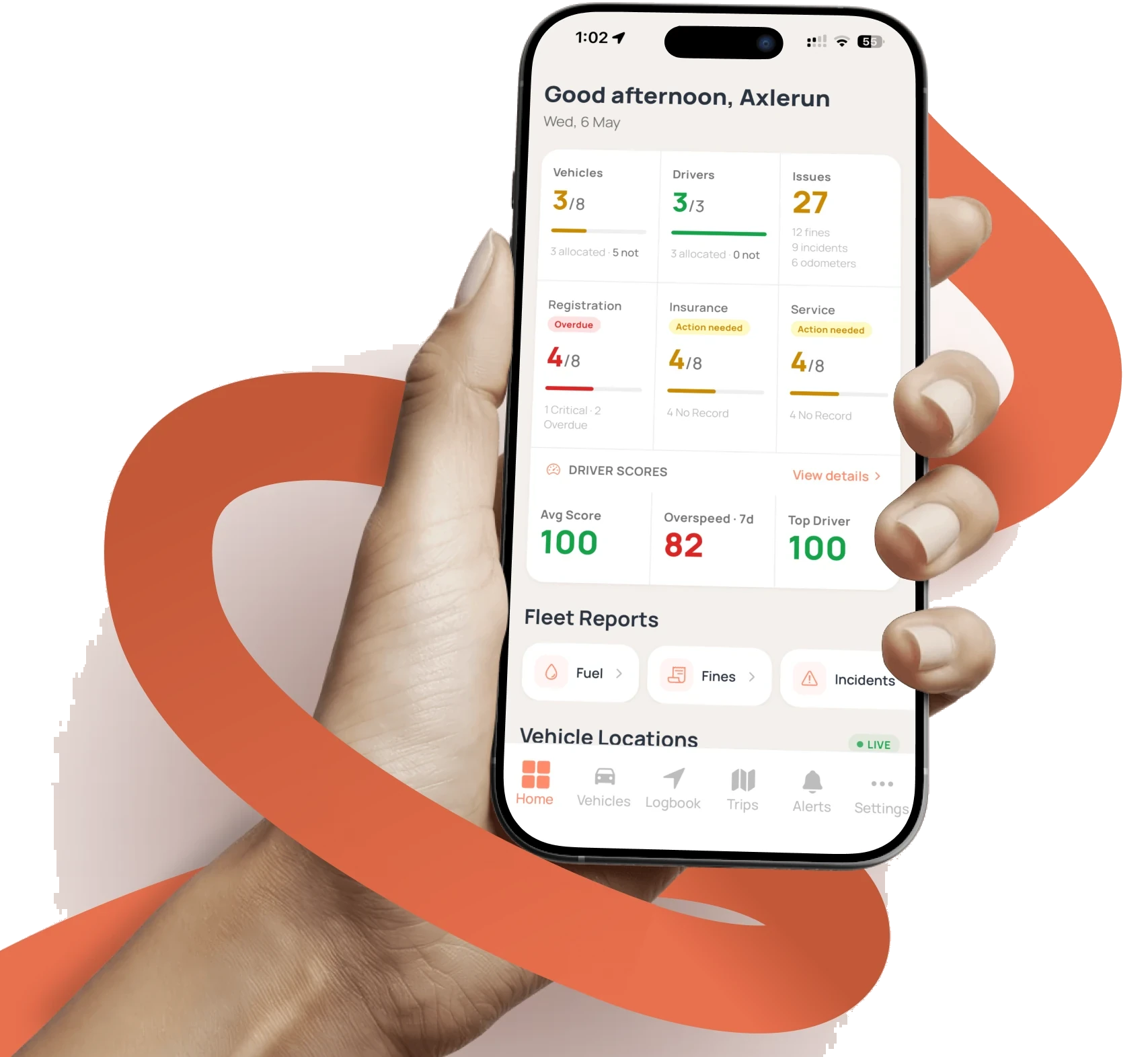
Axlerun stores the rego, CTP, service and inspection dates for each vehicle on the free Drive plan, and the first three vehicles are free forever. The part that does the remembering is compliance alerts, which are on Cruise. They warn you before a date passes, so the pink slip gets booked while there is still time to fix a failed brake light. The NSW compliance guide has the rest of the state’s rego and green slip rules in one place.
Whichever way you track it, the job is the same. Know which vehicles are over five years old. Include the trailer. Inspect inside the three months before each expiry.
Frequently asked questions
How old does a car have to be to need a pink slip in NSW?
Most light vehicles need a yearly safety inspection report once they are more than five years old. Transport for NSW counts the five years from the month and year on the compliance plate. For imported vehicles, it counts from the month and year of manufacture. Your rego renewal notice states whether an inspection is required for that renewal.
Does a trailer need a pink slip in NSW?
Usually, yes. Trailers and caravans with an aggregate trailer mass of 4.5 tonnes or less are light vehicles, so they need a safety check once they are more than five years old. The main exemption is a trailer with a tare under 251 kg and no brakes. From 1 July 2026 the maximum fee is $41 with brakes and $27 without.
How long is a NSW pink slip valid for?
A NSW safety inspection report for a light vehicle is valid for six months, excluding public passenger vehicles, and must be used to renew registration within that time. The 42-day figure some sites quote applies to other inspections: interstate inspection reports and AUVIS (blue slip) inspections for unregistered vehicles.
How much is a pink slip in NSW in 2026?
Transport for NSW sets maximum fees, which took effect on 1 July 2026: $52 for a light vehicle, $29 for a motorcycle, $41 for a trailer with brakes and $27 for a trailer without brakes, all including GST. A mobile examiner charges the same inspection fee but may add a separately disclosed call-out or travel fee.
What happens if my ute fails its pink slip?
The defects must be repaired before the rego can be renewed. If the repairs are done within 14 days and the vehicle goes back to the same authorised inspection station, no extra inspection fee applies. After 14 days you pay another inspection fee. Any suitably qualified mechanic can do the repairs, not just the examiner who found the problem.
Can a small business line up all its NSW rego renewal dates?
Only if it is big enough. The NSW Common Expiry Date scheme puts a fleet's registrations on one renewal date, but it is limited to fleets with 10 or more light vehicles or 2 or more heavy vehicles. Conditional and seasonal registrations cannot be included. Smaller fleets keep separate renewal dates, and pink slips, for each vehicle.
Sources
- 1.Safety checks and vehicle inspections — NSW Government (Transport for NSW)
- 2.Vehicle safety check and inspection fees — NSW Government (Transport for NSW)
- 3.Get a safety inspection report (pink slip) — Service NSW
- 4.Renew a vehicle registration online — Service NSW
- 5.Bulk register fleet vehicles with a common expiry date — Service NSW
- 6.Find a mobile safety check provider — NSW Government (Transport for NSW)
- 7.Light Vehicle Safety Check Standards — Transport for NSW
- 8.Roadworthiness — NSW Government (Transport for NSW)
Axlerun is fleet software, not a tax agent. Rates and rules change — confirm anything that affects your return with your accountant or the ATO.
Fleet admin, minus the admin.
A short roundup a week — FBT, rego, fuel and fines — plus the occasional Axlerun update. No spam, unsubscribe any time.